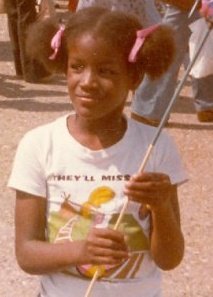
Puff Balls

Puff Balls
Showing posts with label kinky hair. Show all posts

Monday, December 12, 2011

Paul Orfalea and Kinko's: A Surprising Hair Inspiration

Paul Orfalea, Founder of Kinko's

Yesterday between analyzing data and washing my hair, I watched "The One Percent", a documentary by Jamie Johnson (heir of the Johnson & Johnson estate) on social class in the United States. One colorful personality covered in the documentary was Paul Orfalea, the founder of Kinko's. I've wondered about the Kinko's name because it sounds like kinky but I didn't think much of it.

Well, it turns out that the Kinko's name came about because Mr. Orfalea has very kinky hair (let's just say that an alternate name was Pubo...I'll let you figure out the origin of that) and was teased about it. Talk about making the best out of a situation. I found it interesting that Mr. Orfalea didn't shy away from this unique character trait (he was in Santa Barbara, CA when he founded Kinko's. Demographic data suggests that kinky hair would have been an anomaly), rather, he embraced it and used it to his benefit.

As I type this in my car, I look at my reflection in the rear view mirror. Just this morning, I asked my husband if my freshly-washed double-strand twists made me look like a pickaninny (I blow-dried my hair before I twisted it and the extra length gave me a different look). Yes, those were the exact words I used. I have a meeting today with several colleagues and they present themselves as having conservative, White backgrounds. In other words, thinking about this meeting made me wonder if I looked "hyper-ethnic". I coined that term (I think) to refer to the sensation I sometimes get when I feel like a neon light is shining on me and highlighting how different I look, think, act, speak, etc.. Now, I try to figure out how to turn that agita into positive energy. Yes, I have the negative thoughts but then, I say, "Girl, this is who you are and how you look, OWN IT". Who knows, my "Kinko's" may be just around the corner.

Have you ever felt hyper-ethnic in a professional or social setting? Please, share your stories!

Image found at: http://www.google.com/url?source=imglanding&ct=img&q=http://www.usc.edu/dept/pubrel/trojan_family/spring99/images/insupport2.gif&sa=X&ei=dgzmTumYM8jm0QGH0eD6BQ&ved=0CAsQ8wc&usg=AFQjCNE_XzsxWpZEJ2bHsbp-fBgqcNEcIA


Paul Orfalea and Kinko's: A Surprising Hair Inspiration

Paul Orfalea, Founder of Kinko's

Yesterday between analyzing data and washing my hair, I watched "The One Percent", a documentary by Jamie Johnson (heir of the Johnson & Johnson estate) on social class in the United States. One colorful personality covered in the documentary was Paul Orfalea, the founder of Kinko's. I've wondered about the Kinko's name because it sounds like kinky but I didn't think much of it.

Well, it turns out that the Kinko's name came about because Mr. Orfalea has very kinky hair (let's just say that an alternate name was Pubo...I'll let you figure out the origin of that) and was teased about it. Talk about making the best out of a situation. I found it interesting that Mr. Orfalea didn't shy away from this unique character trait (he was in Santa Barbara, CA when he founded Kinko's. Demographic data suggests that kinky hair would have been an anomaly), rather, he embraced it and used it to his benefit.

As I type this in my car, I look at my reflection in the rear view mirror. Just this morning, I asked my husband if my freshly-washed double-strand twists made me look like a pickaninny (I blow-dried my hair before I twisted it and the extra length gave me a different look). Yes, those were the exact words I used. I have a meeting today with several colleagues and they present themselves as having conservative, White backgrounds. In other words, thinking about this meeting made me wonder if I looked "hyper-ethnic". I coined that term (I think) to refer to the sensation I sometimes get when I feel like a neon light is shining on me and highlighting how different I look, think, act, speak, etc.. Now, I try to figure out how to turn that agita into positive energy. Yes, I have the negative thoughts but then, I say, "Girl, this is who you are and how you look, OWN IT". Who knows, my "Kinko's" may be just around the corner.

Have you ever felt hyper-ethnic in a professional or social setting? Please, share your stories!

Image found at: http://www.google.com/url?source=imglanding&ct=img&q=http://www.usc.edu/dept/pubrel/trojan_family/spring99/images/insupport2.gif&sa=X&ei=dgzmTumYM8jm0QGH0eD6BQ&ved=0CAsQ8wc&usg=AFQjCNE_XzsxWpZEJ2bHsbp-fBgqcNEcIA


Tuesday, July 12, 2011

Beach bonding and interracial friendship Part 2


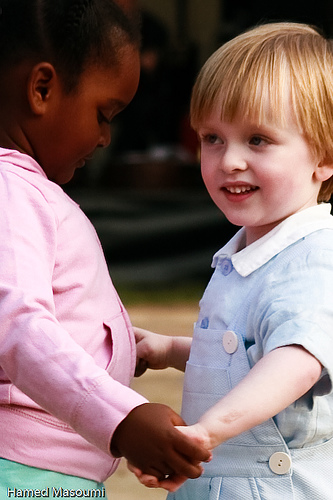
Photo by Hamed Masoumi / Image found at: http://change-production.s3.amazonaws.com/photos/wordpress_copies/race/2010/08/blackwhitefriends.jpg


This past weekend, my daughter and I had some fabulous bonding time at the beach. Plus, I was happy to see my daughter making a new friend at the beach. As I mentioned in my last blog (http://tropie7189.blogspot.com/2011/07/beach-bonding-and-interracial.html), all was going well until my daughter’s new friend whispered, “Are you black?” We addressed that and I thought the conversation between the two of them would return to sea snails, sand and cartwheels. Not quite.


My daughter recently got beautiful cornrows in her hair and I put them into a little bun in order to protect them at the beach. Like most girls, my daughter loves to play in hair patting her bun, taking the bun down and putting it back up again. My daughter was in the process of taking down her bun at the beach when her new friend, within earshot of my daughter, leaned in and said to me, “Her hair is really, REALLY short”. Oh my goodness. I tried my best not to grit on the little girl (sorry, that is IN there and I had to work to suppress it) and said, “Actually, her hair is quite long and very, very curly.” I hate the fact that I felt compelled to add in the fact that my daughter’s hair is long. Ugh, there I go again falling into the myth that length is a proxy for beauty (http://tropie7189.blogspot.com/2011/06/long-hair-myth-thanks-frenchie.html). But, it’s true. My daughter has a head full of long, thick, kinky hair and I bristled when the little girl referred to it as “really, really short”. Images of pickaninnies and headscarfed mamies floated through my head. Gosh, this stuff is potent.


I think that the two incidents (asking if my daughter was Black and then stating that her hair was really, really short) compounded and made racial identity highly salient to me. However, I might have responded differently if my daughter hadn’t been there. I might have asked questions rather than making comments. However, my own internal issues coupled with my protective Mommy nature kicked in and I felt that I needed to defend my daughter. How would you all have handled this?

Beach bonding and interracial friendship Part 2


Photo by Hamed Masoumi / Image found at: http://change-production.s3.amazonaws.com/photos/wordpress_copies/race/2010/08/blackwhitefriends.jpg


This past weekend, my daughter and I had some fabulous bonding time at the beach. Plus, I was happy to see my daughter making a new friend at the beach. As I mentioned in my last blog (http://tropie7189.blogspot.com/2011/07/beach-bonding-and-interracial.html), all was going well until my daughter’s new friend whispered, “Are you black?” We addressed that and I thought the conversation between the two of them would return to sea snails, sand and cartwheels. Not quite.


My daughter recently got beautiful cornrows in her hair and I put them into a little bun in order to protect them at the beach. Like most girls, my daughter loves to play in hair patting her bun, taking the bun down and putting it back up again. My daughter was in the process of taking down her bun at the beach when her new friend, within earshot of my daughter, leaned in and said to me, “Her hair is really, REALLY short”. Oh my goodness. I tried my best not to grit on the little girl (sorry, that is IN there and I had to work to suppress it) and said, “Actually, her hair is quite long and very, very curly.” I hate the fact that I felt compelled to add in the fact that my daughter’s hair is long. Ugh, there I go again falling into the myth that length is a proxy for beauty (http://tropie7189.blogspot.com/2011/06/long-hair-myth-thanks-frenchie.html). But, it’s true. My daughter has a head full of long, thick, kinky hair and I bristled when the little girl referred to it as “really, really short”. Images of pickaninnies and headscarfed mamies floated through my head. Gosh, this stuff is potent.


I think that the two incidents (asking if my daughter was Black and then stating that her hair was really, really short) compounded and made racial identity highly salient to me. However, I might have responded differently if my daughter hadn’t been there. I might have asked questions rather than making comments. However, my own internal issues coupled with my protective Mommy nature kicked in and I felt that I needed to defend my daughter. How would you all have handled this?

Wednesday, April 27, 2011

Natural Hair and Professionalism Part 2

Once I got the big chop, I was LOVING my hair. I loved the way that the wind felt on my ears and neck; loved that I could wash my hair every day if I wanted and still take only 5 minutes to style it and look FLY; loved that I was learning about my hair, how much to pick it, brush it, oil it, I was discovering myself; loved that my face had taken center stage; loved that I was a visual testimony that natural hair is an option. I was proud of myself for doing what felt authentic to me despite societal pressures to conform to another notion of beauty.

However, I must admit that I still had my hang-ups. I was about to graduate and I was very concerned that my natural hair would hinder me at my new consulting job. Consulting was (is) a white, male-dominated industry. While everyone, including white men, must conform to workplace expectations about appearance, I was concerned that my hair might make me stand out as a black woman and suggest that I was unwilling to be a “team player”. After all, wasn’t it best to just do good work, keep my head down and blend in as much as possible? Wouldn’t my hair peg me as different from the get go? Rosette & Dumas (2007)[1] wrote an insightful paper about this issue; an excerpt from page 421 of the paper sums up a key insight:

“…for minority women in general and Black women in particular, “looking the part” at work carries the additional dimension of managing attributions, expectations, and stereotypes based solely on core aspects of their identities—the immutable characteristics of race and gender.

In isolation, Black women’s preferences to straighten their hair may seem simply to be a choice of adornment; however, when coupled with all the other available “self-improvement” choices in which they sometimes engage—such as wearing colored contacts, lightening their skin, reducing the size of their lips, and decreasing the size of their noses—it is clear that the standard of beauty in the U.S. is in direct opposition to the natural features and characteristics of most Black women.”

I’ve noted that some people think this discussion about my hair journey is highly irrelevant because “hair is just hair”. However, when considered in combination with the other “beauty” choices we make, it becomes more evident that our hair is inextricably linked to how we see ourselves and how we think others value our natural beauty. If we really, really thought that our natural beauty was highly valued would we go through such extremes to change it? If people were spending millions of dollars to ADD kink to their hair, would we feel differently about our naturally kinky hair? My point is not that women shouldn’t alter the state of their hair, just that they ask WHY they are doing so rather than assuming that that is their only, or even best, “beauty” option.


[1] Rosette, A.R. & Dumas, T. (2007). The hair dilemma: Conform to mainstream expectations or emphasize racial identity. Duke Journal of Gender Law & Policy, 14, 407-421.

Natural Hair and Professionalism Part 2

Once I got the big chop, I was LOVING my hair. I loved the way that the wind felt on my ears and neck; loved that I could wash my hair every day if I wanted and still take only 5 minutes to style it and look FLY; loved that I was learning about my hair, how much to pick it, brush it, oil it, I was discovering myself; loved that my face had taken center stage; loved that I was a visual testimony that natural hair is an option. I was proud of myself for doing what felt authentic to me despite societal pressures to conform to another notion of beauty.

However, I must admit that I still had my hang-ups. I was about to graduate and I was very concerned that my natural hair would hinder me at my new consulting job. Consulting was (is) a white, male-dominated industry. While everyone, including white men, must conform to workplace expectations about appearance, I was concerned that my hair might make me stand out as a black woman and suggest that I was unwilling to be a “team player”. After all, wasn’t it best to just do good work, keep my head down and blend in as much as possible? Wouldn’t my hair peg me as different from the get go? Rosette & Dumas (2007)[1] wrote an insightful paper about this issue; an excerpt from page 421 of the paper sums up a key insight:

“…for minority women in general and Black women in particular, “looking the part” at work carries the additional dimension of managing attributions, expectations, and stereotypes based solely on core aspects of their identities—the immutable characteristics of race and gender.

In isolation, Black women’s preferences to straighten their hair may seem simply to be a choice of adornment; however, when coupled with all the other available “self-improvement” choices in which they sometimes engage—such as wearing colored contacts, lightening their skin, reducing the size of their lips, and decreasing the size of their noses—it is clear that the standard of beauty in the U.S. is in direct opposition to the natural features and characteristics of most Black women.”

I’ve noted that some people think this discussion about my hair journey is highly irrelevant because “hair is just hair”. However, when considered in combination with the other “beauty” choices we make, it becomes more evident that our hair is inextricably linked to how we see ourselves and how we think others value our natural beauty. If we really, really thought that our natural beauty was highly valued would we go through such extremes to change it? If people were spending millions of dollars to ADD kink to their hair, would we feel differently about our naturally kinky hair? My point is not that women shouldn’t alter the state of their hair, just that they ask WHY they are doing so rather than assuming that that is their only, or even best, “beauty” option.


[1] Rosette, A.R. & Dumas, T. (2007). The hair dilemma: Conform to mainstream expectations or emphasize racial identity. Duke Journal of Gender Law & Policy, 14, 407-421.